
Intro
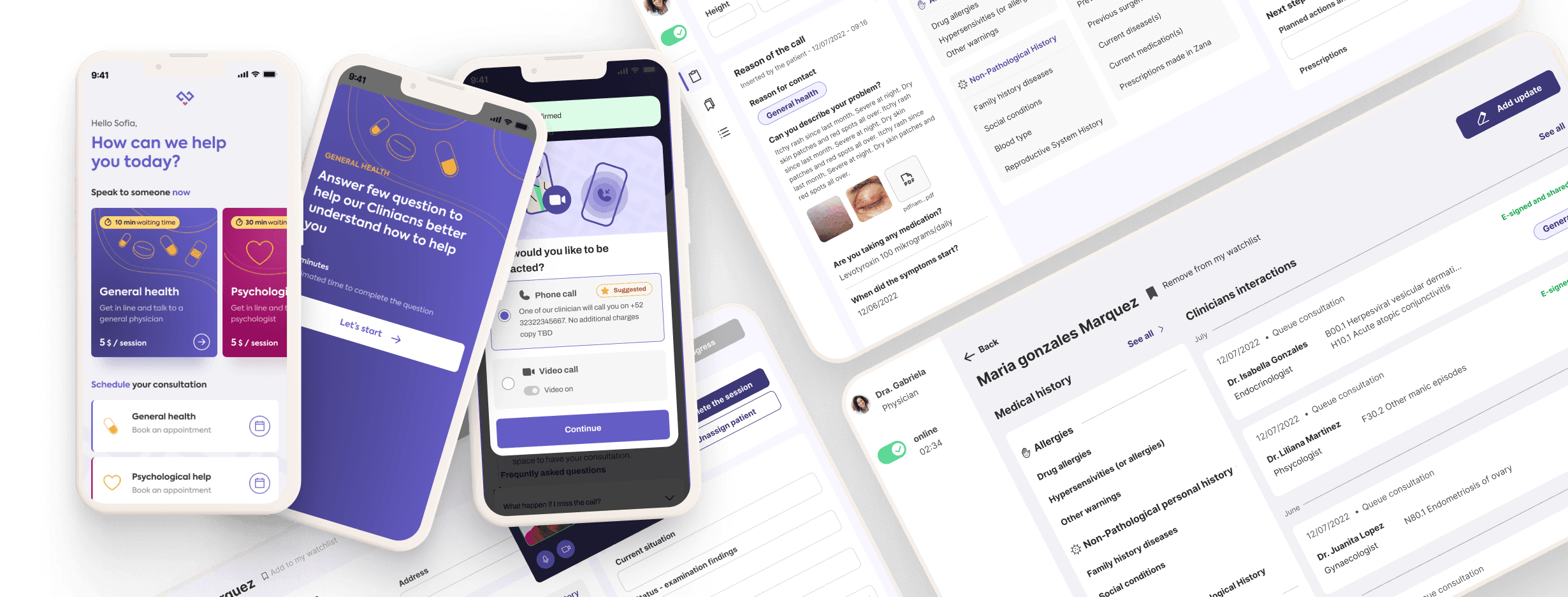
While at Nearform, I designed Zana, a women’s health app created in Mexico to make medical care more accessible, affordable, and human. Zana connects patients and clinicians through a digital platform that bridges care gaps with empathy and clarity. I chose to feature this project because it represents the kind of design work I care most about, where social impact meets product innovation. It shows how thoughtful UX can build trust in healthcare and help patients feel supported at every step of their journey.
How I worked
I collaborated with clinicians, product owners, and engineers to design both the patient-facing mobile app and the clinician dashboard.
My focus was on accessibility, usability, and cultural context, ensuring the experience was inclusive for women across diverse communities.
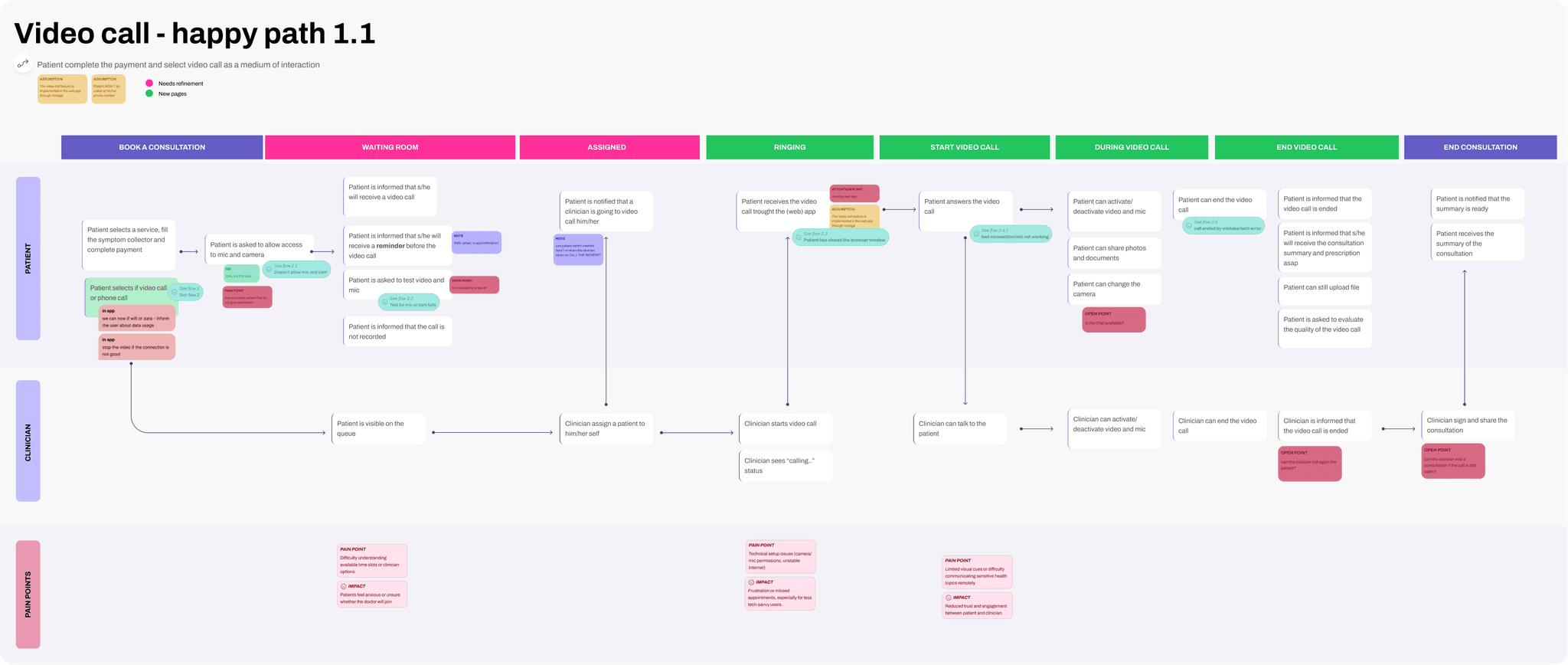
I led UX research, mapped patient–clinician flows, and built interactive prototypes tested with real users and medical professionals.
By connecting both sides of the experience, patient and clinician, we helped Zana deliver a unified digital care system that supports ongoing treatment and human connection.
Kickoff Workshop
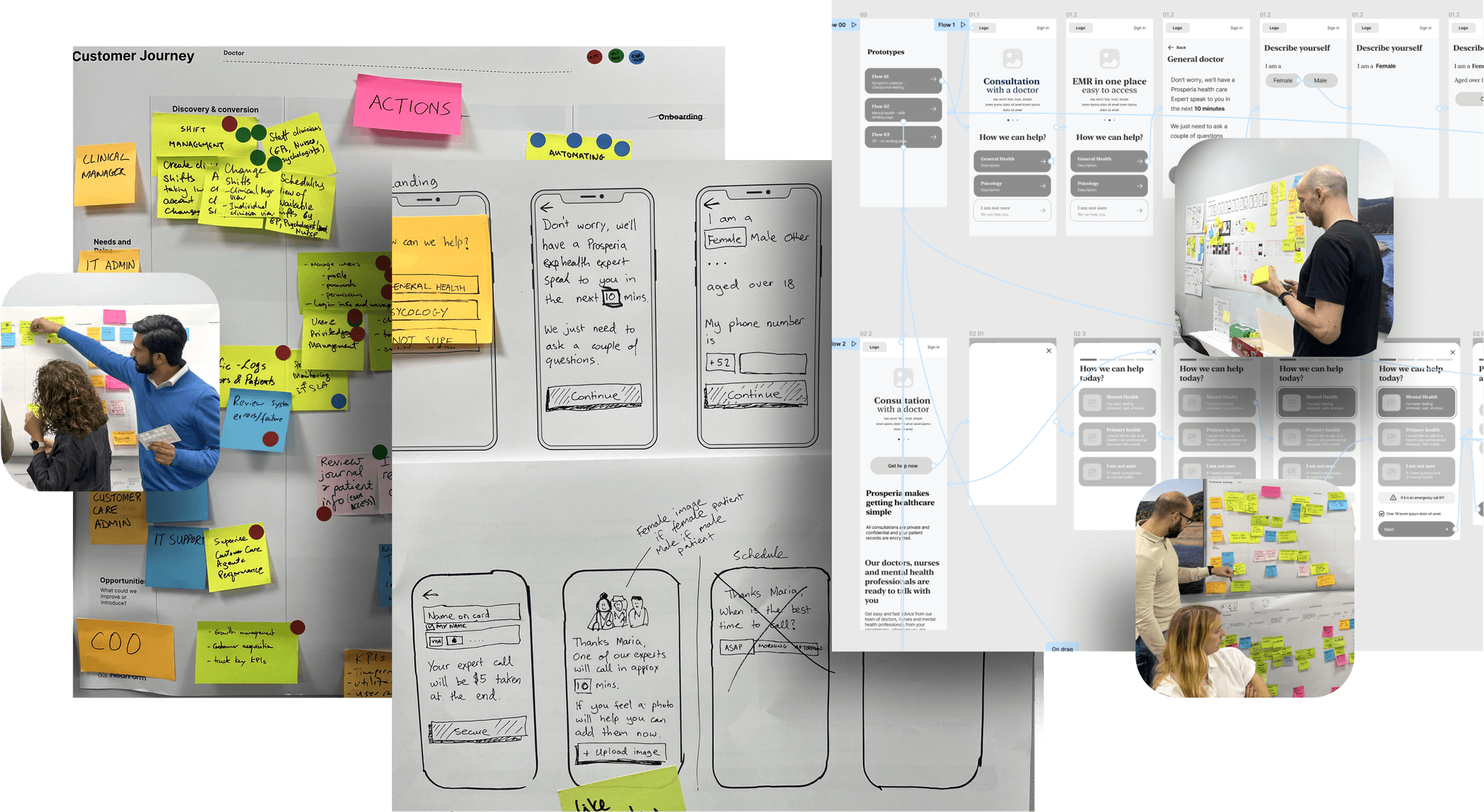
I facilitated a 3-day kickoff workshop with the client to align on goals, needs, and technical constraints. Together we defined the design deliverables and set a clear roadmap for the project.
What we did
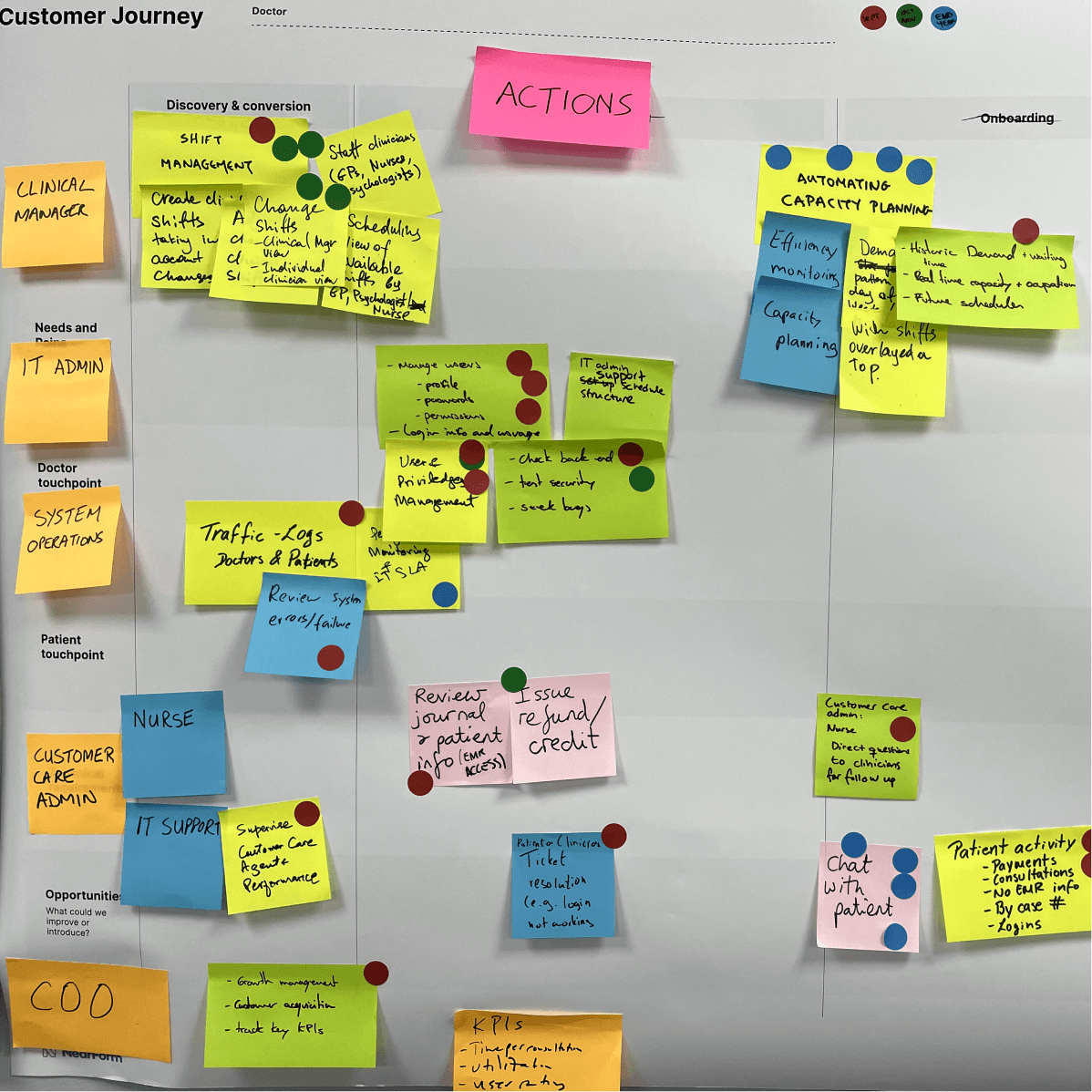
Day 1
Mapped patient and clinician journeys and identified stakeholder roles.
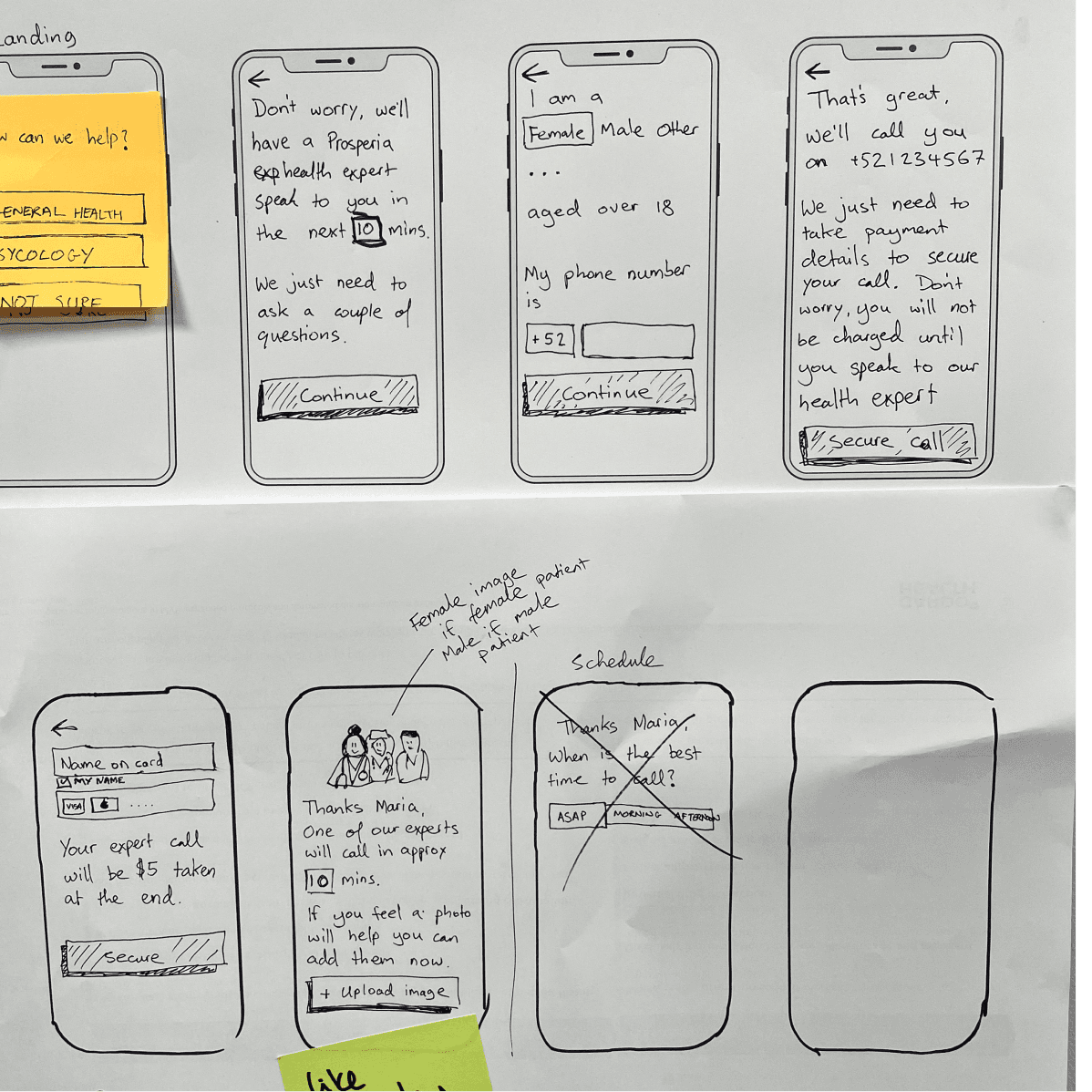
Day 2
Co-designed early solutions and discussed edge cases with clinicians and engineers.
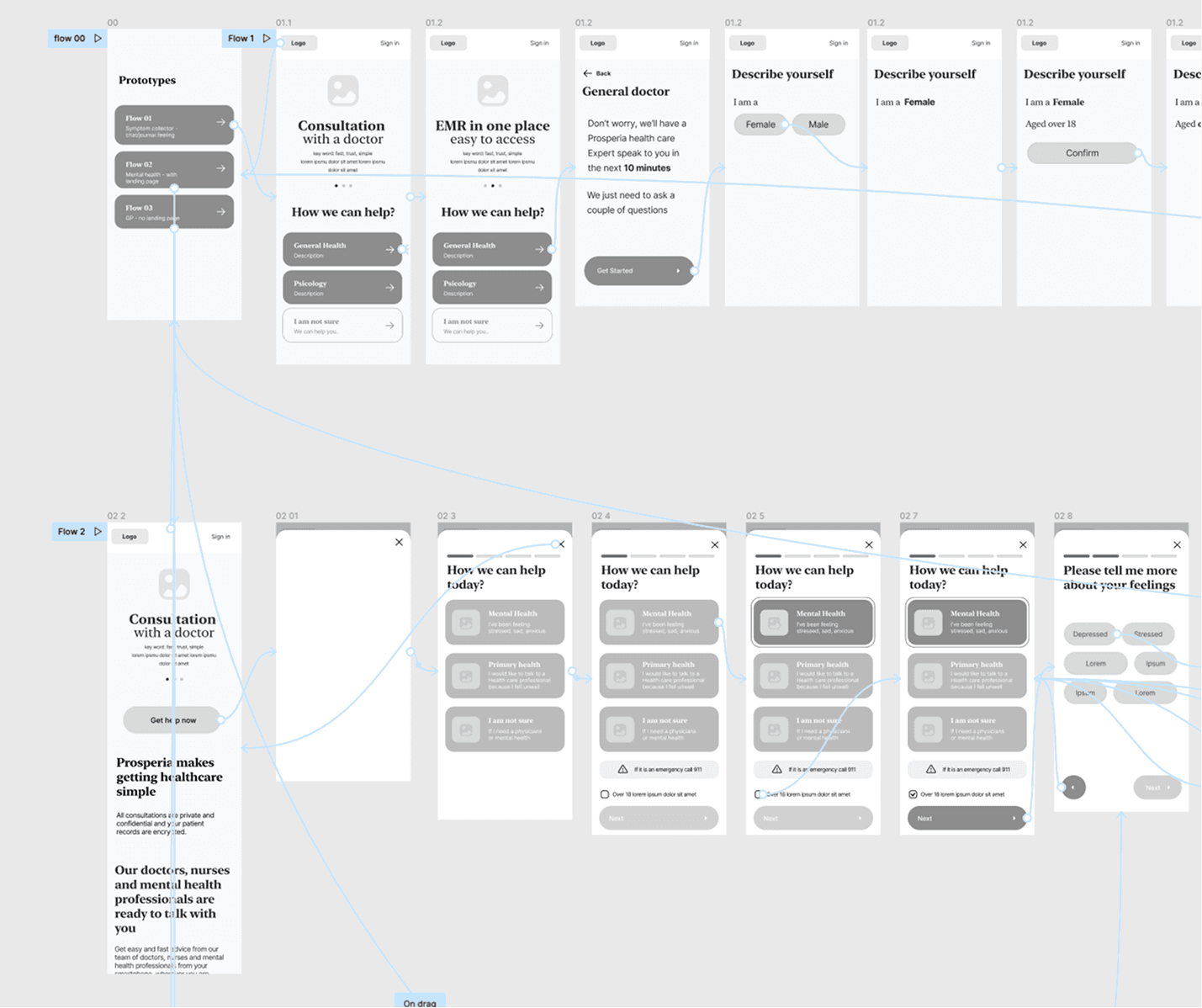
Day 3
Validated the main user flows and built the roadmap for the next design sprints.
Key deliverables
Customer journey
Product roadmap
Main app flows
Dashboard flow
Outcome
This workshop set a strong foundation for collaboration, ensuring every design decision reflected real clinical workflows and patient needs.
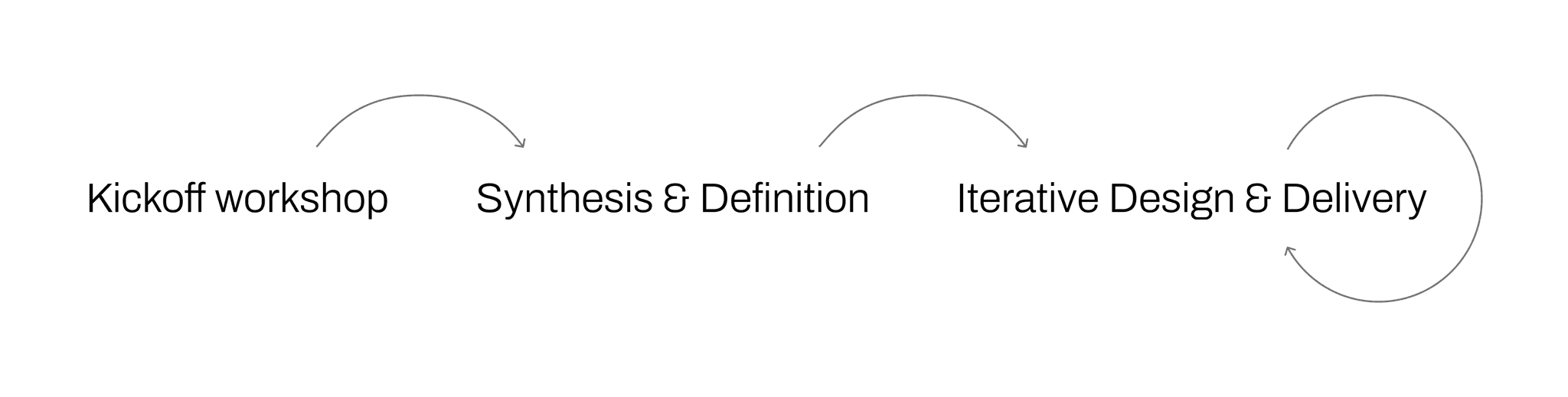
Synthesis & Definition
After the workshop, I spent a few days analyzing and consolidating the outcomes with the team.The goal was to transform raw input from clinicians and stakeholders into a solid design foundation for Zana’s patient app.
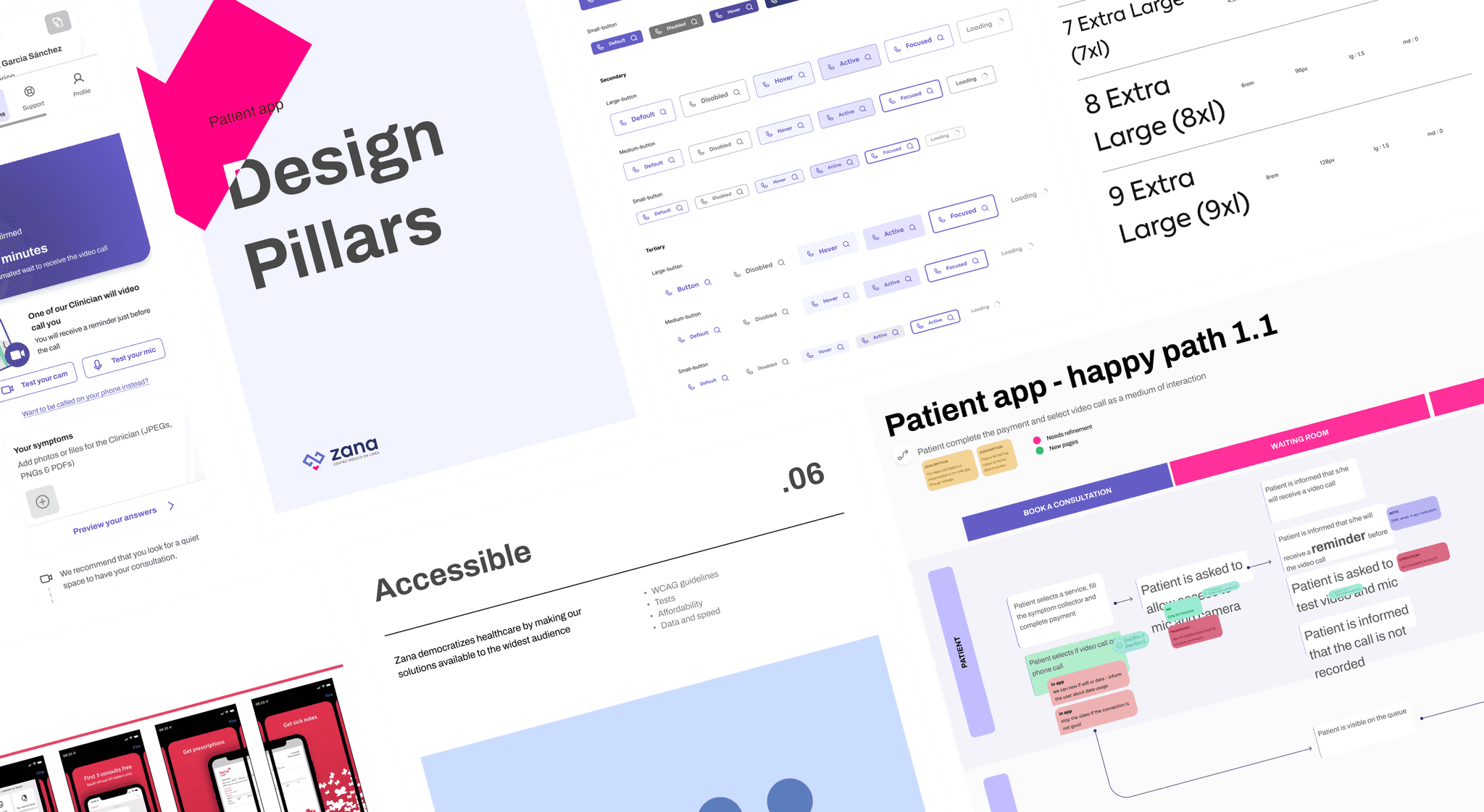
What I focused on
Defined the Design Pillars to guide decision-making throughout the project.
Proposed a cohesive Visual and UI direction aligned with the product’s values of clarity and accessibility.
Created the first structure of the Design System, ensuring scalability and consistency across touchpoints.
Outcome
This phase established the visual and experiential principles that shaped every screen of the patient app, from color and tone to interaction patterns.
Iterative Design & Delivery
Once the foundation was set, the project moved into two-week design sprints.
I collaborated closely with PMs, clinicians, and engineers to prioritize features, validate user flows, and ensure each iteration balanced usability with technical feasibility.
This process allowed us to continuously refine the experience and deliver meaningful progress every sprint.
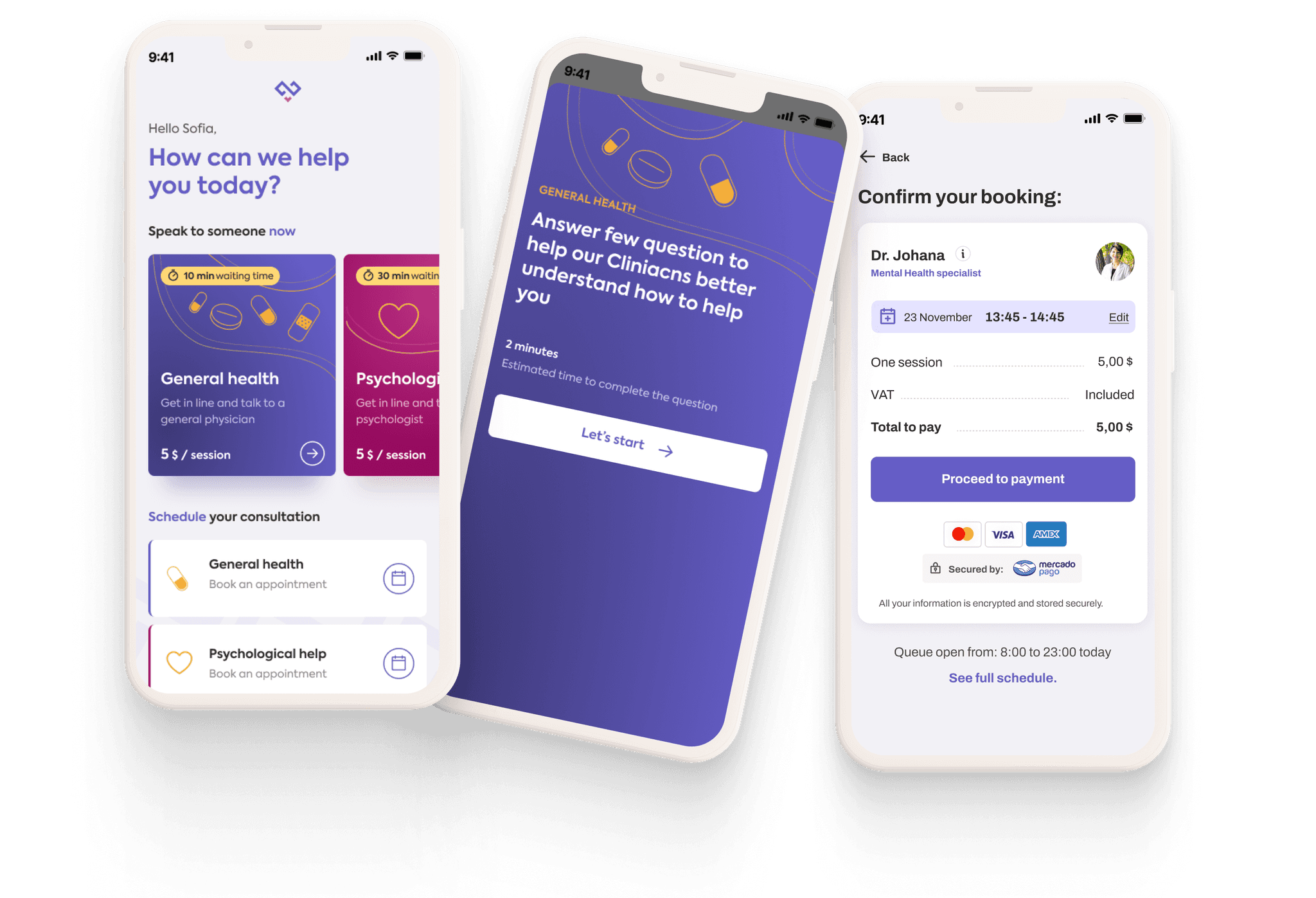
Touchpoints
Patient Mobile App
Designed to help patients navigate healthcare services effortlessly, from booking consultations to joining video calls.
Desktop Clinician App
Created for healthcare professionals to manage appointments, review patient notes, and conduct secure video sessions.
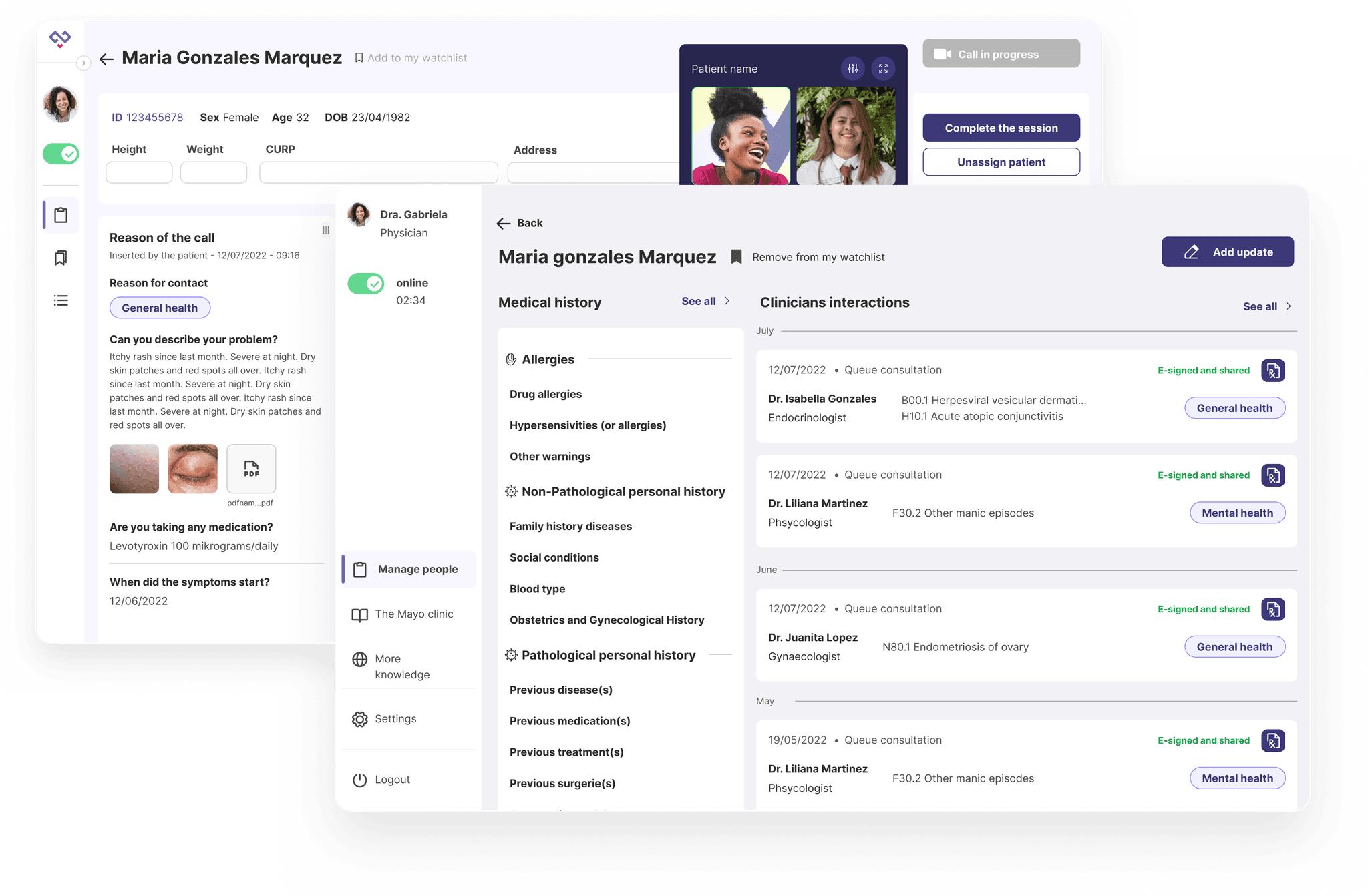
Key deliverables
Customer journey
User Flows
Information Architecture
Design System
Outcome
Reduced booking friction and improved overall patient task completion.
Streamlined clinician workflows for faster setup and fewer edge-case errors.
Delivered a scalable design system that supported rapid iteration and cross-platform coherence.